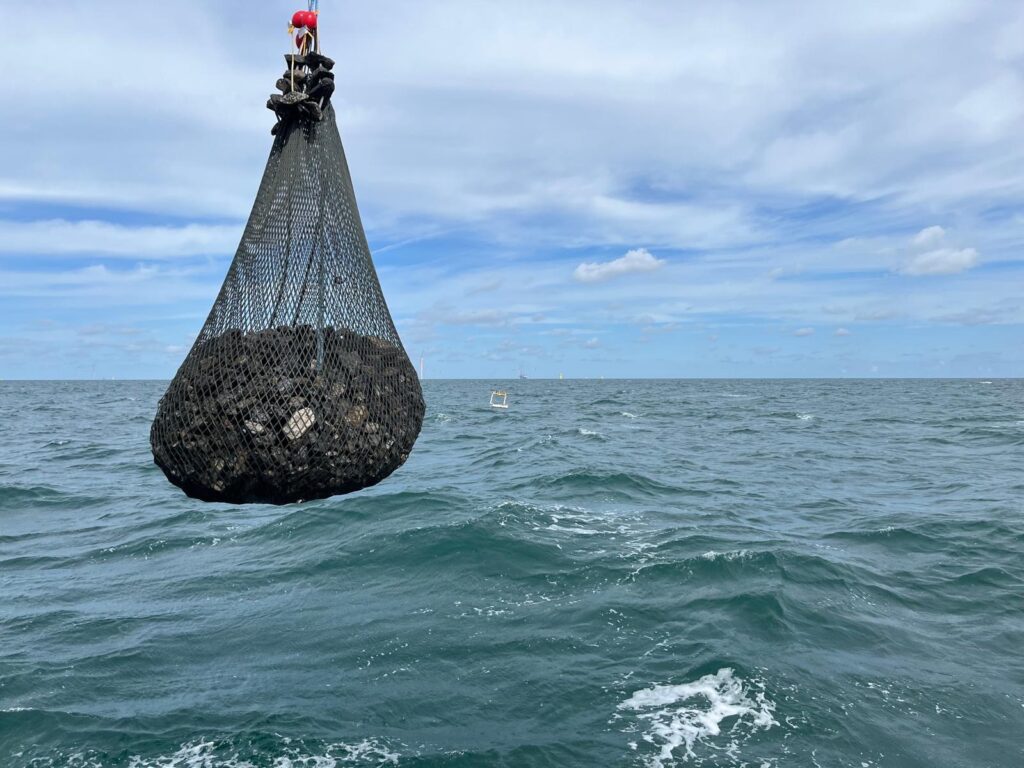
“This deployment demonstrates that offshore infrastructure can also provide a boost to nature restoration. Together with our partners, we are creating new opportunities for oysters and other species while helping build a North Sea where sustainable energy and a thriving underwater ecosystem reinforce one another.”

Grid operator TenneT is building so-called “power sockets at sea.” Through offshore cables, the company transports renewable energy generated at sea to the coast, connecting offshore wind farms to the national high-voltage electricity grid. Where power cables cross existing infrastructure, rock armor is required to protect the cables. These rocks are also used in large quantities during the construction and maintenance of offshore wind farms.
This experiment investigates whether oysters can successfully colonize these rocks and whether deploying such “oyster stones” can be integrated into existing maritime infrastructure projects. To achieve this, nine environmental organizations, research institutions and companies working in or around the North Sea have joined forces. Their efforts are driven by concerns about the decline in biodiversity in the North Sea.
Reefs in the North Sea
European flat oysters are a key species for biodiversity in the North Sea. As they reproduce, they grow attached to one another, forming reefs. These reefs provide habitat for a wide variety of marine animals and seaweed species. Oysters also filter the water and release nutrients, contributing to a rich food supply for other organisms.
Flat oyster reefs were once widespread throughout the North Sea but have largely disappeared due to overfishing, pollution and disease. Reintroducing large numbers of native oysters could stimulate the development of new reefs. The hope is that this tested method can help support that goal.
Shipping Containers as Mobile Hatcheries
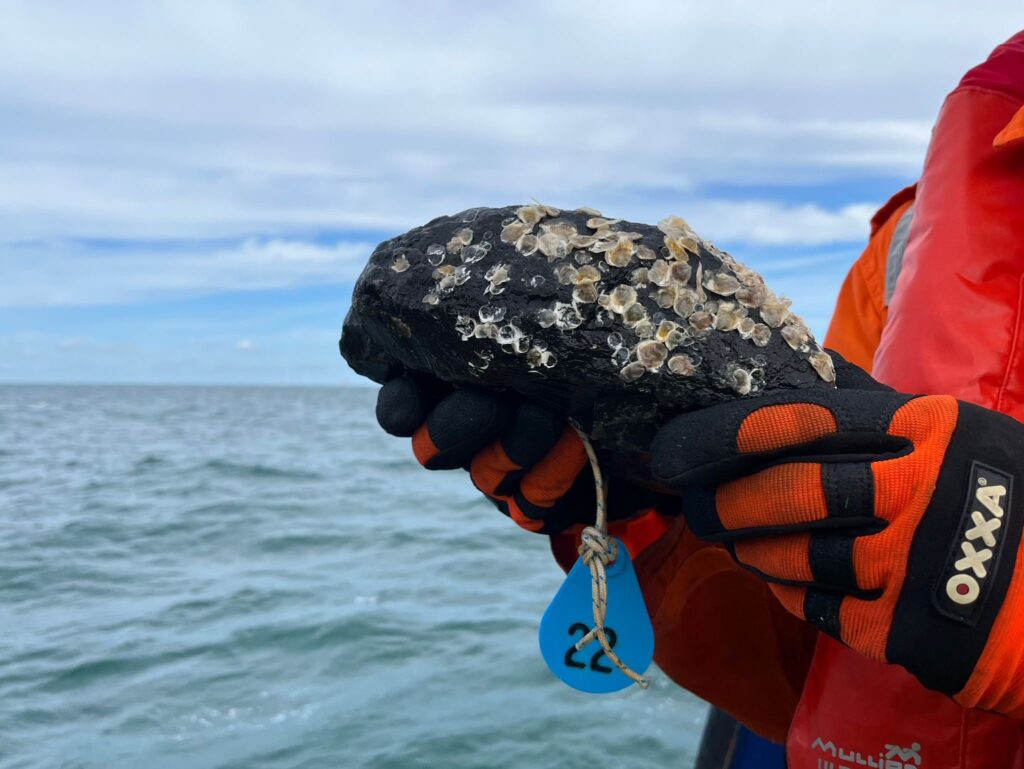
To enable oysters to grow on rock armor on a large scale, the consortium converted shipping containers into mobile hatchery facilities. They experimented with an innovative cultivation method called “remote setting.” In this process, oyster larvae are transferred from a hatchery to a location close to the sea.
Inside the shipping containers, which were filled with seawater and rock armor, millions of larvae attached themselves to the rocks within a few days. Over the course of several months, they grew to a size of several millimeters. Yesterday, the containers were loaded onto a work vessel, and the “oyster stones” were deployed at sea.
“In the coming years, TenneT will realize many new grid connections for offshore wind farms. It is important that, alongside the development of infrastructure in the North Sea, opportunities are also seized to preserve and restore its ecology. This pilot project, involving the placement of European flat oysters on existing cable crossings and potentially on new cable crossings in the future, provides valuable insights into how such measures can contribute to the large-scale restoration of North Sea nature.”
First Offshore Trial
Yesterday’s deployment marked the start of the first offshore trial of this method. Last year, the technique was tested for the first time in a near-shore environment in the Port of Rotterdam. Research into the survival and growth of young oysters in the port provided valuable insights and led to improvements for this year’s trial.
For example, temperature and food availability inside the mobile hatcheries were kept more stable, resulting in significantly more oyster settlement per stone. During this year’s deployment, researchers are closely monitoring oyster survival at every stage of the process, including land transport, sea transport and final placement on the rock armor. The aim is to further improve the deployment method.
Over the coming year, monitoring activities will determine whether the young oysters survive and continue to grow in the open waters of the North Sea.