What is TOPPING?
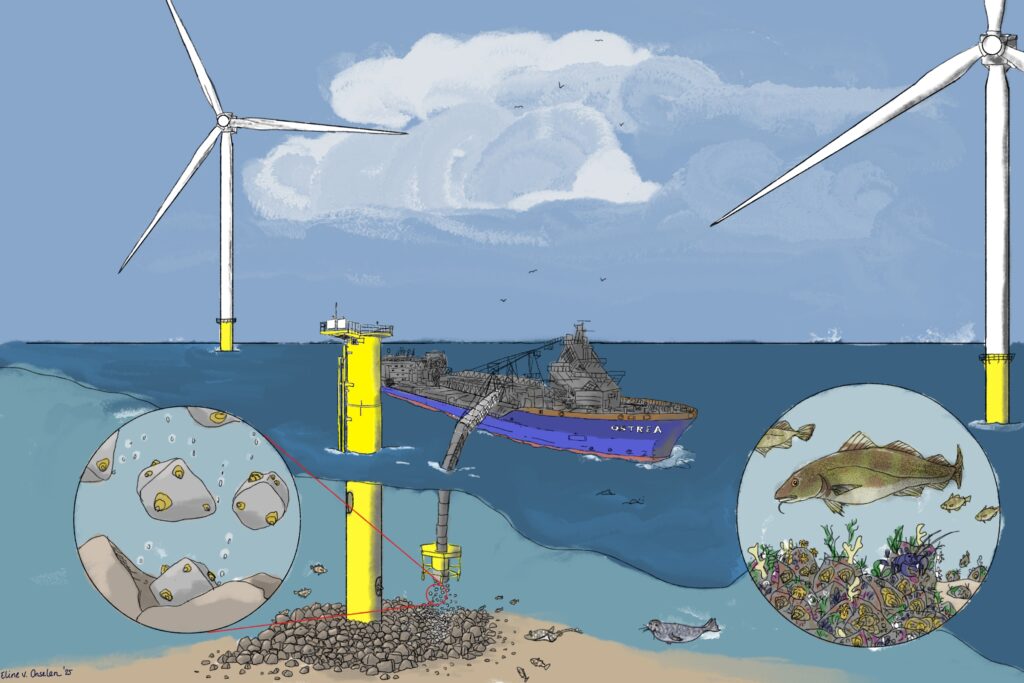
TOPPING – The Oystrification Program for Practical Integrated Nature Gain – aims to enable the standardized application of native oyster spat on offshore wind turbine foundations and cable crossings, transforming offshore wind infrastructure into long lasting new habitats that support marine biodiversity, improve water quality and strengthen ecosystem resilience.
Together, the three organizations aim to develop a practical roadmap for the offshore wind industry, engaging developers, supply chain actors, policymakers and conservation organizations across the entire value chain. The main goal is to embed oyster reef development as a nature positive design standard in offshore wind infrastructure, from planning and tendering through construction and operation. The project will draw on practical experience from large-scale oyster development projects in the Netherlands, Belgium and other North Sea countries, and covers topics such as the standardization of oyster spat-on rock application, reducing costs and operational barriers for the offshore industry and the improvement of monitoring, reporting and knowledge dissemination across projects.
Why is TOPPING important?
Native oyster reefs once covered vast areas of the North Sea but have now been almost entirely lost due to overfishing and other habitat destruction, pollution and diseases introduced by mankind. Recent scientific assessments classify European native oyster reefs as a collapsed ecosystem. At the same time, the rapid expansion of offshore wind provides a unique opportunity to reverse this decline at unprecedented scale.
Remote setting
Offshore wind foundations and cable protections use rocky materials that are similar to the substrates used in oyster reef restoration worldwide. By adding oyster larvae to these materials before installation (a technique known as remote setting) renewable energy infrastructure may support the reestablishment of self-sustaining oyster reefs with minimal additional cost or construction complexity.
What expertise do the partners bring?
The Nature Conservancy (TNC)
The Nature Conservancy contributes experience from oyster reef restoration efforts in different regions globally, supporting the recovery of degraded marine habitats and the development of practical restoration approaches.
The Native Oyster Restoration Alliance (NORA)
The Native Oyster Restoration Alliance (NORA) contributes a Europe wide network of scientists, practitioners and restoration projects dedicated to the recovery of Ostrea Edulis.
The Rich North Sea
And we from The Rich North Sea add deep expertise in cross sector collaboration between nature conservation, offshore energy, policy and science, with a strong track record of delivering practical nature-inclusive solutions in the North Sea.
By combining scientific innovation, policy expertise and practical guidelines, the project seeks to ensure that Europe’s offshore wind expansion not only accelerates the clean energy transition, but also actively contributes to marine ecosystem recovery.
Read more about this topic on our project page.