TOPPING

Start
Partners The Nature Conservancy (TNC), Native Oyster Restoration Alliance (NORA)
Our impact

A road map for oyster-reef integration in offshore wind development

Native oyster reefs once covered vast areas of the North Sea. It played a vital role in water quality, seabed stability, and marine biodiversity. However, over time, disease and human activities have caused these reefs to almost completely disappear. While near-shore restoration efforts have shown successful but tentative results, large-scale recovery in open sea remains challenging due to technological, legal, and financial barriers. At the same time, Europe’s rapid expansion of offshore renewable energy through wind farms creates new opportunities to link nature restoration with new infrastructure. The TOPPING project documents these opportunities and shapes them into a roadmap to support future implementation.

The collaboration

Project partners

By bringing together scientific innovation, policy expertise, and practical guidelines, the TOPPING project aims to ensure that the expansion of offshore wind in Europe not only accelerates the energy transition, but also actively contributes to the development of marine ecosystems.

The Rich North Sea
We contribute our expertise in multi‑sector collaboration between nature organizations, offshore energy companies, scientific institutions, and policymakers. This is delivered through a proven track record in developing nature‑enhancement solutions in the North Sea.

The Nature Conservancy (TNC)
The Nature Conservancy contributes experience from oyster reef restoration efforts in different regions globally, supporting the recovery of degraded marine habitats and the development of practical restoration approaches.

The Native Oyster Restoration Alliance (NORA)
The Native Oyster Restoration Alliance contributes a Europe wide network of scientists, practitioners and restoration projects dedicated to the recovery of Ostrea Edulis.

This project is financed by the Gieskes-Strijbis Fund.

The research

Together, the three organizations aim to develop a practical roadmap for the offshore wind industry, engaging developers, supply chain actors, policymakers and conservation organizations across the entire value chain. The main goal is to embed oyster reef development as a nature positive design standard in offshore wind infrastructure, from planning and tendering through construction and operation.

The project will draw on practical experience from large-scale oyster development projects in the Netherlands, Belgium and other North Sea countries, and covers topics such as the standardization of oyster spat-on rock application, reducing costs and operational barriers for the offshore industry and the improvement of monitoring, reporting and knowledge dissemination across projects.

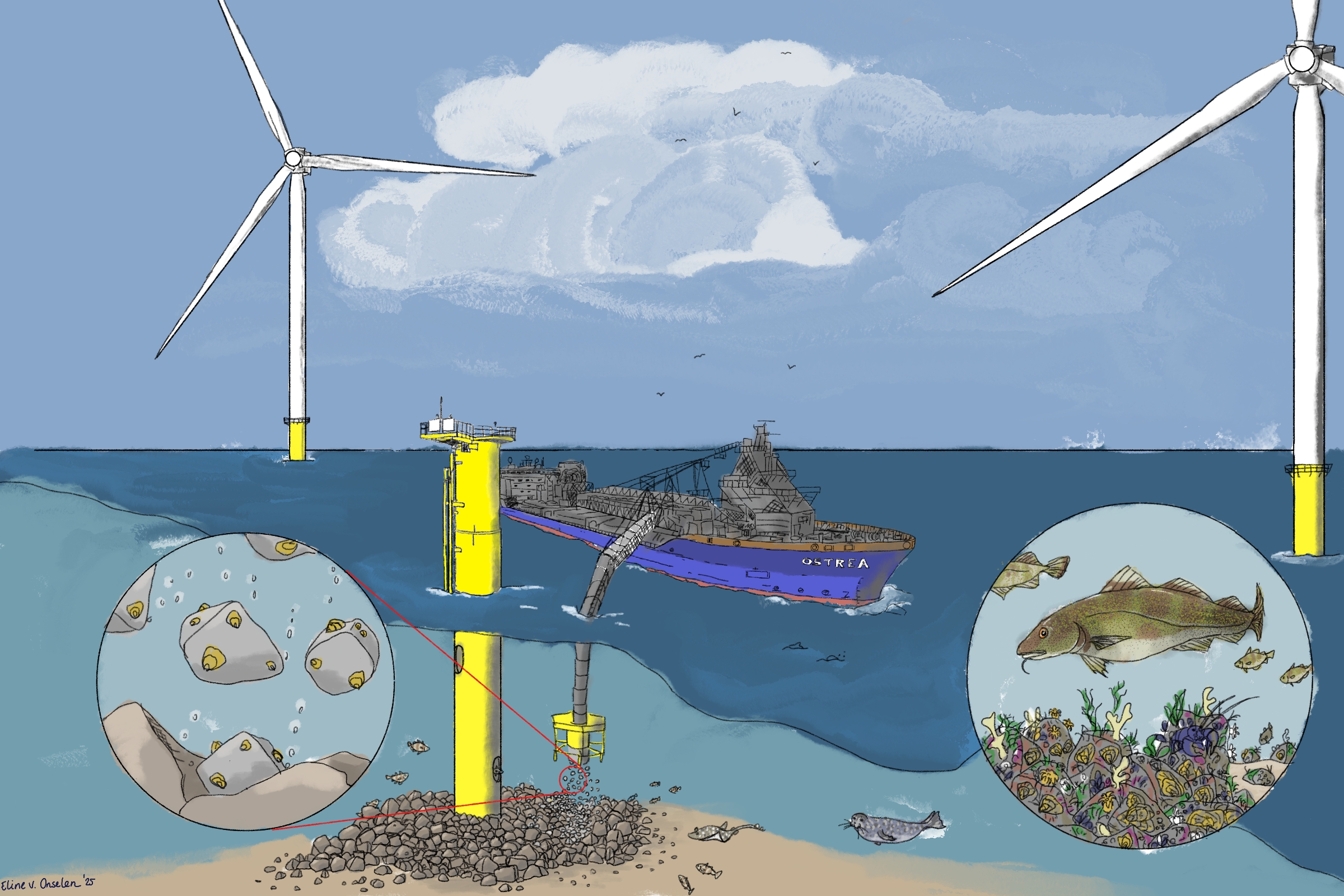
TOPPING applies remote setting, a technique in which oyster larvae are introduced onto rocks meant for scour protection. The larvae are attached before the rocks are placed around offshore structures. This way, infrastructure becomes ecological substrate while offering a cost-effective path toward large-scale ecosystem development. By taking away barriers, TOPPING delivers a practical roadmap with clear guidelines for implementation in the North Sea.

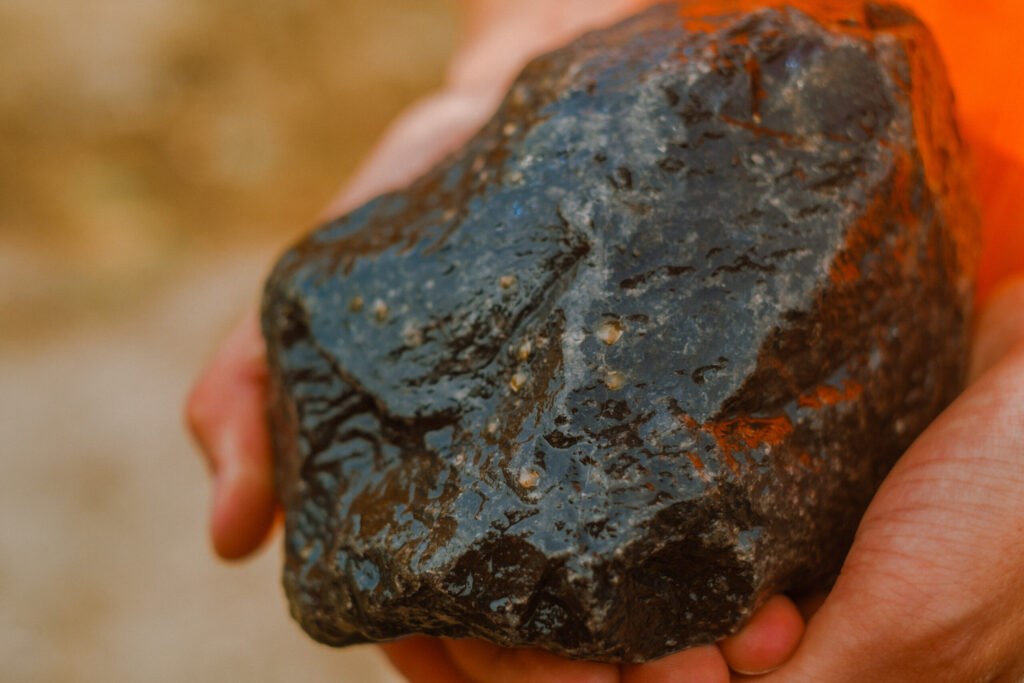
Foto van steen met baby-oesters - credits Lex Bezemer

Our role

“Over the past years at The Rich North Sea, we have learned that advancing from pilot projects to truly scalable, nature‑inclusive offshore wind requires embedding ecological considerations directly into technical design. From installation through monitoring, meaningful progress depends on uniting nature and engineering as an integrated whole.”

Marjolein Kelder
Marjolein Kelder

Over the years, we’ve built extensive experience through the execution of pilot projects at offshore wind farms. We’ve done this by working closely with partners from the offshore energy sector, scientific institutions, and NGOs. Furthermore, through the TOPPING project we bring together different actors from our network. Together, we’re committed to advancing nature and ecosystem development in the North Sea.

Results

The TOPPING project’s starting date is 2026. Because of this recency, there isn’t any concrete data available yet. However, information on the remote setting method can already be found on the remote setting project page.

The TOPPING project runs until the end of the first half of 2028. Once completed, the definitive roadmap for integrating oyster-reef development in offshore wind farms will be published and made available through the Toolbox.

Want to see results and reports from other projects? Explore the Toolbox:

Toolbox